Buying a Home in Rochester? Your Complete Water Quality Checklist
Why Water Quality Belongs on Your Inspection Checklist
Most homebuyers review the city or county water quality report and assume their new home's water is fine. But there's a critical gap between municipal water quality and what actually comes out of your tap:
The city tests water at the treatment plant and at select distribution points -- not at your faucet. By the time water reaches your home, it has traveled through miles of municipal pipes and through your home's own plumbing. Contaminants like lead, copper, and bacteria can enter the water between the treatment plant and your glass.
Your home's plumbing is unique. The age of the service line, the materials used in interior plumbing, the condition of solder joints, the type of fixtures -- all of these affect water quality in ways that a citywide report can't capture.
Water quality affects your home's value and your ongoing costs. Hard water that damages appliances, lead plumbing that requires remediation, or well water that needs treatment are all financial considerations that should factor into your purchase decision and budget planning.
Undisclosed issues can become expensive surprises. New York State disclosure requirements for home sales are limited. Sellers are not required to test water quality, and many genuinely don't know what's in their water. Issues you discover after closing become your responsibility.
Rochester Red Flags: Lead Service Line Lookup
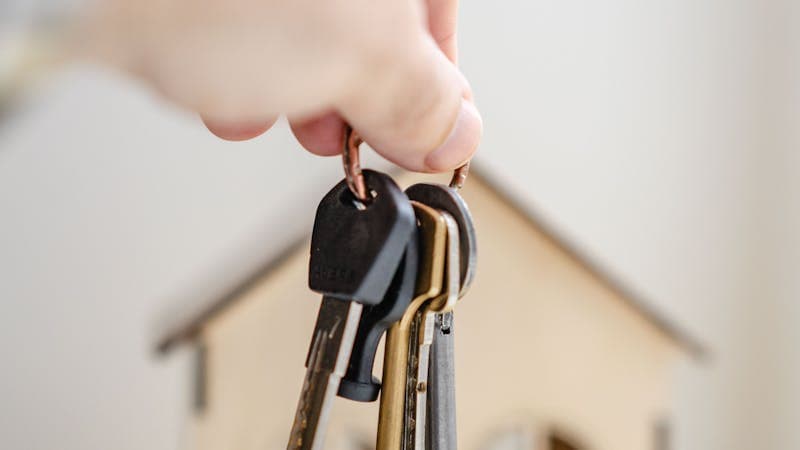
This is the single most important water quality check for any Rochester home purchase. The City of Rochester and Monroe County Water Authority maintain records of known and suspected lead service lines.
Step 1: Determine the home's water service line material. The Rochester Water Authority's website offers a service line lookup tool where you can search by address. You can also call the Water Authority directly and request service line information for the property. During the home inspection, ask the inspector to visually check the service line where it enters the basement. Lead pipes are dull gray, soft enough to scratch with a key, and will show a shiny silver color when scratched.
Step 2: Check the home's age.
- Homes built before 1986 almost certainly have lead solder in copper pipe joints, and many have lead service lines. This is the highest-risk category.
- Homes built between 1986 and 2014 are less likely to have lead service lines but may have brass fixtures with lead content (up to 8% was legal until the 2014 Reduction of Lead in Drinking Water Act).
- Homes built after 2014 should be lead-free in all components, though the service line connecting to the municipal main may still be older.
Step 3: Factor lead into your offer and budget. If the home has a lead service line, you'll want to budget for either filtration ($300-700 for an under-sink RO system) or eventual service line replacement ($3,000-8,000 for the homeowner's portion, potentially less through the city's cost-sharing program). A confirmed lead service line is not necessarily a deal-breaker -- roughly 30% of Rochester homes have one. But it should be a known factor, not a surprise.
Pre-1986 Homes: Additional Plumbing Concerns
Rochester's housing stock is among the oldest in the Northeast. Many neighborhoods -- Park Avenue, South Wedge, Upper Monroe, Corn Hill, the 19th Ward -- feature beautiful but aging homes that come with specific water quality considerations:
- Galvanized steel pipes (common in homes from the early 1900s through the 1960s) corrode internally, creating rust-colored water and eventually restricting flow. They can also accumulate lead from lead solder or lead service lines.
- Lead-soldered copper joints (pre-1986) leach lead into water, especially in first-draw samples.
- Original brass fixtures may contain significant lead content.
- Cast iron drain lines don't affect drinking water quality but may be near the end of their lifespan and contribute to plumbing system concerns.
During the home inspection, ask specifically about pipe materials throughout the house. A comprehensive plumbing assessment costs $200-400 and can reveal issues that a standard home inspection might miss.
Well Water Properties: Special Requirements
Approximately 4,500 homes in Monroe County rely on private wells rather than municipal water. If you're considering a well water property, the stakes are higher and the requirements are more complex.
FHA and VA loans require that the well meets specific standards before loan approval. This typically includes a satisfactory water quality test (bacteria-free, safe nitrate levels), adequate well flow rate (typically minimum 3-5 gallons per minute), proper well construction and separation distances from septic systems, and a well inspection by a certified inspector.
Conventional loans may or may not require well testing, depending on the lender. Even if not required, you should insist on comprehensive testing before closing.
What to test for on well water properties:
- Bacteria (Total Coliforms and E. coli): Non-negotiable. Bacterial contamination makes water unsafe to drink.
- Nitrates: Particularly important near agricultural land or septic systems.
- Lead and copper: The home's plumbing may contribute even without lead service lines.
- Hardness, iron, and manganese: Extremely common in Monroe County wells and affect water quality and appliance lifespan.
- pH: Acidic water causes corrosion and can leach metals from plumbing.
- Arsenic: Naturally occurring in some Monroe County geological zones. The EPA limit is 10 ppb.
A comprehensive well water test through a certified lab costs $150-400. This is a small investment compared to the cost of discovering contamination after you've closed on the property.
What the City Water Report Doesn't Tell You
Every year, the Rochester Water Authority publishes a Consumer Confidence Report (CCR) that details water quality at the system level. It's a useful document, but it has significant limitations for individual homebuyers:
- It reports system-wide averages, not your address. Lead levels, DBP concentrations, and other contaminants vary throughout the distribution system. Your home's water may be significantly different from the reported average.
- It doesn't account for your home's plumbing. The CCR measures water quality in the distribution system, not after it has passed through your home's pipes and fixtures.
- It uses annual averages that smooth out seasonal spikes. Disinfection byproducts peak in summer and are lowest in winter. The annual average may not represent your actual exposure during high seasons.
- It doesn't test for everything. The CCR covers EPA-regulated contaminants but doesn't address emerging concerns like microplastics, pharmaceutical residues, or certain PFAS compounds.
- It represents last year's data. Water quality can change due to infrastructure aging, treatment process changes, or source water variations.
For these reasons, a home-specific water test is essential and should be considered part of the standard home buying process for any Rochester property.
Your First 30 Days: Essential Steps
You've closed on the house and moved in. Here's your water quality action plan for the first month:
Day 1-7: Immediate Actions
1. Flush the system. If the home has been vacant, run cold water at every tap for 2-3 minutes to flush stagnant water from the pipes. This is especially important if the home has known or suspected lead plumbing.
2. Use cold water for drinking and cooking. Hot water dissolves more lead and other metals from plumbing. Until you've tested and potentially installed filtration, use cold tap water for all consumption.
3. Schedule a water test. Contact us for a free in-home water test, or order a certified lab test through the Monroe County Health Department ($50-150 for basic parameters). Don't delay this -- the sooner you know what's in your water, the sooner you can address any issues.
Day 7-14: Review and Assess
4. Review test results. Once results are available, compare them to EPA limits and health-based guidelines. Pay particular attention to lead, hardness, chlorine, and disinfection byproducts.
5. Check for existing water treatment equipment. If the home has a water softener, filter system, or other treatment equipment, verify that it's functional, has been maintained, and has current filter cartridges. Neglected systems can harbor bacteria or perform worse than no system at all.
6. Look up your service line status. If you haven't already, verify whether the property has a lead service line.
Day 14-30: Take Action
7. Install appropriate filtration. Based on your test results, install the filtration system that addresses your specific water quality issues. For most Rochester homes, an under-sink RO system for drinking water is the minimum recommended investment. Add a whole-house carbon filter or softener based on your results and budget.
8. Establish a maintenance schedule. If you install filtration equipment, set calendar reminders for filter replacements. Mark annual water testing on your calendar as well -- water quality can change over time.
9. Consider the lead service line replacement program. If your home has a lead service line, contact the Rochester Water Authority about their replacement cost-sharing program. Even if you install filtration now, replacing the line is the long-term solution.
Protecting Your Investment and Your Family
A home is the largest purchase most families make, and the water flowing through it affects both your health and the building itself. Hard water slowly damages plumbing and appliances. Lead in pipes creates an ongoing exposure risk. Untreated well water can harbor bacteria that make your family sick.
Taking water quality seriously during the home buying process is not overcautious -- it's the same practical diligence you apply to roof inspections, foundation assessments, and radon testing. The difference is that water quality issues are almost always fixable with relatively affordable filtration solutions. The key is knowing what you're dealing with.
Our team provides free water testing for Rochester and Monroe County homes, whether you're in the process of buying, recently closed, or have lived in your home for years. Schedule a test today, and we'll give you a complete picture of your water quality along with specific, budget-appropriate recommendations.
Ready to Know Your Water?
This article covers the "what" and "why"—but every home's water is unique. Our free in-home water test shows you exactly what's in YOUR water and recommends the right filtration solution for your situation.
Schedule Free Water TestRelated Articles
Chlorine Byproducts in Your Tap Water: What Rochester Residents Need to Know About THMs and HAAs
Rochester's trihalomethane levels have hit 81 ppb -- legal but 115x the EWG health guideline. Here's what disinfection byproducts are, why they form, and how to remove them.
Read more →
Bottled Water vs. Filtered Tap Water: Which Is Actually Safer (and Cheaper)?
Bottled water contains 3x more nanoplastics than tap, costs 300x more per gallon, and is regulated less strictly. Here's why filtered tap water wins on safety, cost, and environmental impact.
Read more →
New EPA Lead Rules for 2028: What Every Rochester Homeowner Needs to Know
The EPA's Lead and Copper Rule Improvements take full effect in 2028, lowering the action level to 10 ppb and mandating service line replacement. Here's what it means for Rochester homeowners.
Read more →