Microplastics in Drinking Water: What Rochester Families Should Know in 2026
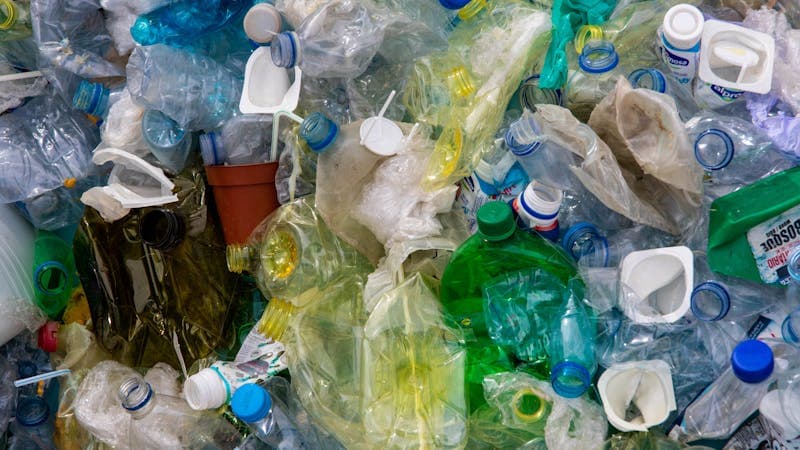
What Are Microplastics (and Nanoplastics)?
Microplastics are tiny plastic fragments smaller than 5 millimeters -- roughly the size of a sesame seed or smaller. They come from the breakdown of larger plastic items (bottles, bags, packaging), synthetic clothing fibers released during washing, tire wear on roads, and industrial processes. Once in the environment, these particles don't biodegrade. They persist for hundreds of years, breaking into ever-smaller pieces.
Nanoplastics are the even tinier fragments -- smaller than 1 micrometer (one-thousandth of a millimeter). These particles are small enough to cross cell membranes and enter the bloodstream. Until recently, scientists couldn't reliably measure nanoplastics in water. New detection techniques developed in 2024-2025 revealed that nanoplastic concentrations are orders of magnitude higher than previously estimated.
The distinction matters because while municipal water treatment can capture some larger microplastics, nanoplastics slip through conventional filtration systems almost entirely.
The Great Lakes Crisis: Rochester's Front Door
Lake Ontario, Rochester's primary drinking water source, sits at the downstream end of the entire Great Lakes system. Water flows from Lake Superior through Lakes Michigan, Huron, and Erie before reaching Ontario. Every microplastic that enters the system upstream eventually reaches our lake.
The numbers are sobering:
- Over 90% of Great Lakes surface water samples contain detectable microplastics, according to research from the Rochester Institute of Technology and the University of Toronto.
- Lake Ontario consistently shows some of the highest microplastic concentrations in the Great Lakes system, likely due to its downstream position and the population density along its shores.
- A 2023 study published in Environmental Science & Technology estimated that Lake Ontario contains approximately 1.5 million microplastic particles per square kilometer of surface water.
- Wastewater treatment plants along the Great Lakes discharge billions of microplastic particles daily. While treatment removes 95-99% of particles, the sheer volume of water processed means billions still pass through.
- Stormwater runoff from Rochester's urban areas carries tire dust, synthetic fibers, and plastic debris directly into the Genesee River and ultimately Lake Ontario.
Rochester's water treatment facility uses coagulation, sedimentation, and sand filtration -- processes that remove some microplastics incidentally. However, these systems were designed decades before microplastic contamination was recognized as a concern. There are currently no EPA standards for microplastics in drinking water and no requirement for utilities to test for or remove them.
Health Risks: What the Latest Research Shows
Scientific understanding of microplastic health effects has advanced significantly in 2025 and 2026. While researchers are careful to note that long-term studies in humans are still ongoing, the emerging picture is concerning:
Inflammation and cellular damage. A landmark 2025 study from Columbia University demonstrated that nanoplastics can penetrate human gut cells, triggering inflammatory responses. The particles carry chemical additives (plasticizers, flame retardants, heavy metals) that leach into tissue once inside the body.
Cardiovascular concerns. Research published in the New England Journal of Medicine in early 2025 found microplastics in arterial plaque samples from cardiac patients. Patients with higher concentrations of microplastics in their arteries had a 4.5 times greater risk of heart attack, stroke, or death over a 34-month follow-up period.
Endocrine disruption. Many plastics contain compounds that mimic estrogen and other hormones. BPA, phthalates, and other plastic additives are known endocrine disruptors. When nanoplastics carry these chemicals across cell membranes, they deliver hormone-disrupting compounds directly into tissue at the cellular level.
Children's vulnerability. Children consume proportionally more water relative to body weight than adults, and their developing organ systems are more susceptible to toxic exposures. A 2025 pediatric study estimated that children ingest approximately 40% more microplastic particles per pound of body weight than adults.
Bottled Water Is Not the Answer
Many families assume that switching to bottled water eliminates microplastic exposure. The reality is the opposite.
A groundbreaking February 2026 study from Ohio State University, published in the Proceedings of the National Academy of Sciences, found that bottled water contains approximately three times more nanoplastic particles than tap water. The researchers used advanced Raman spectroscopy to identify an average of 240,000 detectable plastic particles per liter of bottled water, compared to roughly 80,000 per liter in tap water samples.
The primary culprit? The plastic bottles themselves. PET (polyethylene terephthalate) bottles shed nanoplastic particles into the water they contain, especially when exposed to heat, sunlight, or extended storage. Even water bottled in "BPA-free" containers sheds significant quantities of other plastic polymers.
This finding upends the assumption that bottled water is cleaner. For families concerned about microplastics specifically, bottled water is demonstrably worse than filtered tap water.
Which Filters Actually Remove Microplastics?
Not all water filters are created equal when it comes to microplastic removal. The key factor is pore size -- the physical openings in the filter media that determine what gets through.
Reverse Osmosis (RO): The Gold Standard. RO systems force water through a semi-permeable membrane with pores of approximately 0.0001 microns. Microplastics and nanoplastics are far too large to pass through an RO membrane. Studies show RO systems remove 99.9%+ of microplastics, including nanoplastics down to the detection limit. For Rochester families, an under-sink RO system at the kitchen faucet ($300-700 installed) provides the highest level of microplastic protection for drinking and cooking water.
Ultrafiltration (UF): Strong Performance. Ultrafiltration membranes have pore sizes of 0.01-0.1 microns, which effectively block all microplastics and most nanoplastics. UF systems are available as under-sink units ($150-400) and are effective for microplastic removal, though slightly less comprehensive than RO for the smallest nanoplastics.
Activated Carbon Block Filters: Moderate Protection. High-quality carbon block filters with sub-micron ratings (0.5 micron or smaller) can capture many microplastics. However, they are less effective against the smallest nanoplastic particles. Standard carbon filters like those in most pitcher filters have pore sizes of 5-20 microns and allow significant quantities of microplastics to pass through.
What Doesn't Work:
- Standard pitcher filters (Brita, PUR) with loose carbon granules -- pore sizes are too large
- Faucet-mounted filters with basic carbon -- inconsistent pore sizes
- Boiling -- does not remove or destroy plastics
- UV treatment -- designed for biological contaminants, not particles
- Standard whole-house sediment filters -- typically rated at 5-25 microns, too coarse for most microplastics
Practical Steps for Rochester Families
Given the current science, here's a realistic action plan:
1. Install an RO system for drinking and cooking water. This is the single most effective step you can take. An under-sink RO system at your kitchen faucet removes microplastics, nanoplastics, lead, PFAS, and dozens of other contaminants. It costs $300-700 installed and about $50-100 per year for replacement filters.
2. Stop buying bottled water for daily use. The Ohio State research makes it clear: bottled water exposes your family to more nanoplastics, not fewer. Use filtered tap water in reusable glass or stainless steel containers.
3. Reduce microplastic sources in your home. While water filtration addresses ingestion, you can reduce overall exposure by using natural-fiber clothing when possible (synthetic fabrics shed microfibers during washing), avoiding heating food in plastic containers, and replacing plastic food storage with glass or stainless steel.
4. Consider a whole-house sediment pre-filter. While standard sediment filters don't capture the smallest microplastics, a 1-micron whole-house sediment filter ($200-500 installed) can reduce larger microplastic particles in bathing and laundry water. This complements the kitchen RO system for broader household protection.
5. Test your water. A comprehensive water test establishes your baseline and identifies whether microplastics are your only concern or if you also need to address lead, hardness, chlorine byproducts, or other contaminants. The right filtration system addresses all your issues at once.
What Rochester Families Can Do Today
You don't have to wait for regulators to act. A reverse osmosis system at your kitchen sink provides immediate, proven protection against microplastics and dozens of other contaminants. Combined with a shift away from bottled water, this straightforward step dramatically reduces your family's microplastic exposure.
Our team installs RO systems throughout Rochester and Monroe County. We'll start with a free water test to understand your full water quality picture, then recommend a system that addresses microplastics along with any other concerns we identify. Schedule your free water test today and take the first step toward cleaner, safer drinking water for your family.
Ready to Know Your Water?
This article covers the "what" and "why"—but every home's water is unique. Our free in-home water test shows you exactly what's in YOUR water and recommends the right filtration solution for your situation.
Schedule Free Water TestRelated Articles

PFAS "Forever Chemicals" in the Great Lakes: Should You Worry?
PFAS compounds are being found in water sources across the Great Lakes region. We explain the risks and the most effective removal methods.
Read more →
Do You Need a Water Softener in Rochester? A Complete Buyer's Guide
Rochester water ranges from 5 to 12 GPG depending on your source. We break down salt-based vs. salt-free softeners, sizing, costs, and why testing your water is the essential first step.
Read more →
Fluoride in Drinking Water: The 2026 Debate and What It Means for Your Family
With the HHS ending its fluoridation recommendation and states passing opt-out laws, the fluoride debate has never been more heated. Here's what Rochester families need to know to make an informed decision.
Read more →