Safe Water for Babies: A Rochester Parent's Guide to Formula, Bathing, and Filtration
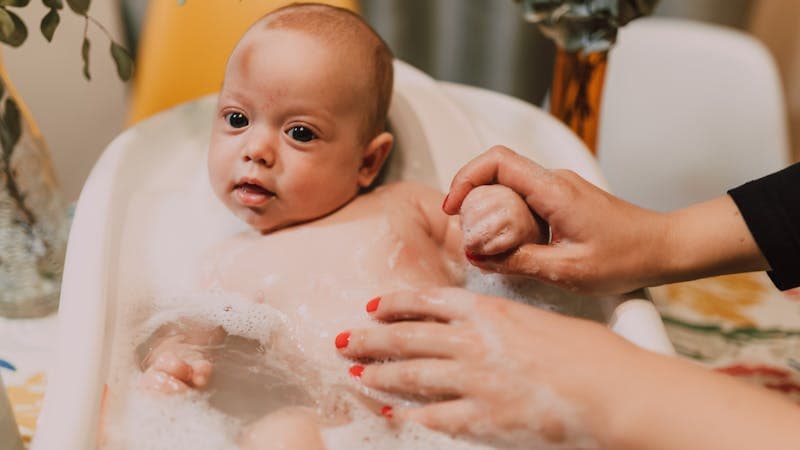
Why Babies Are More Vulnerable
An infant's vulnerability to water contaminants comes down to basic biology:
Higher consumption relative to body weight. A newborn drinking formula consumes approximately 5-6 ounces of water per pound of body weight per day. An adult drinking the recommended 8 glasses consumes roughly 0.5 ounces per pound. That means a baby's dose of any contaminant in water, relative to body weight, is roughly 10 times higher than an adult's.
Developing organ systems. An infant's kidneys, liver, and digestive system are still maturing. These organs filter and process toxins less efficiently than adult organs. Contaminants that an adult body handles with minimal effect can overwhelm an infant's developing systems.
Blood-brain barrier permeability. A baby's blood-brain barrier is not fully formed, making the developing brain more susceptible to neurotoxins like lead. Even low-level lead exposure during infancy can permanently affect cognitive development, attention, and behavior.
Rapid cell growth. Infants are growing at an extraordinary rate, and cellular division is happening at a pace that won't be matched again in their lifetime. Contaminants that disrupt cellular processes -- including endocrine disruptors, certain disinfection byproducts, and heavy metals -- have an outsized impact during this window of rapid development.
These factors mean that water quality standards designed around adult exposure levels don't fully protect infants. The EPA acknowledges this, and the American Academy of Pediatrics recommends that parents of infants take additional precautions with water quality.
The Formula Water Question
For parents who formula-feed (exclusively or supplementally), the water used to mix formula is a critical decision. The baby consumes significant quantities of this water, and any contaminants in it are ingested multiple times daily for months.
Tap water (unfiltered): Rochester municipal tap water meets EPA legal limits and is generally considered safe for formula preparation by the CDC. However, "safe by EPA standards" and "optimal for an infant" aren't the same thing. Rochester tap water may contain lead (especially in older homes), disinfection byproducts, chlorine, fluoride, and trace levels of other contaminants.
Bottled water: Often perceived as the safest option, but recent research complicates this. The February 2026 Ohio State study found bottled water contains approximately three times more nanoplastic particles than tap water. Additionally, some bottled water brands contain added minerals or fluoride at levels the ADA recommends avoiding for infant formula.
Filtered tap water (reverse osmosis): For most Rochester families, this is the optimal choice. An RO system removes lead, chlorine, fluoride, disinfection byproducts, microplastics, and most other contaminants of concern. The result is water that's cleaner than bottled water without the nanoplastic contamination from plastic bottles. The ADA recommends low-fluoride water for infant formula, and RO removes 85-95% of fluoride.
Distilled water: Extremely pure and often recommended on formula labels. However, distilled water from the store comes in plastic jugs (introducing microplastics), and home distillation is impractical for daily formula preparation. RO water approaches distilled quality without the drawbacks.
Our recommendation for Rochester parents: Install a reverse osmosis system at the kitchen sink and use that water for all formula preparation. It provides the cleanest, safest water at a fraction of the ongoing cost of buying bottled or distilled water. At roughly $0.15-0.25 per gallon, RO water costs 5-10 times less than store-bought nursery water.
Rochester-Specific Concerns for Families with Babies
Rochester has several water quality characteristics that are especially relevant for households with infants:
Lead service lines and plumbing. Approximately one-third of Rochester's water service lines contain lead. Homes built before 1986 may also have lead solder in copper pipe joints or lead-containing brass fixtures. For adults, low-level lead exposure is concerning; for infants, it can be devastating. The CDC states there is no safe level of lead exposure for children. The risk is highest with "first-draw" water -- water that has been sitting in lead-containing pipes for several hours (overnight, for example). This is precisely when parents often prepare the first bottle of the day.
Disinfection byproducts (DBPs). Rochester's water contains trihalomethanes (THMs) and haloacetic acids (HAAs) -- byproducts formed when chlorine reacts with organic matter during water treatment. Rochester's THM levels typically range from 12-81 ppb, and some research links DBP exposure during pregnancy and infancy to developmental concerns and increased childhood asthma risk. An activated carbon filter or RO system removes the majority of these compounds.
Chlorine. While chlorine itself is not highly dangerous at Rochester's typical residual levels (0.5-1.5 ppm), it affects the taste and smell of water and can irritate sensitive infant skin during bathing. Many parents notice their baby's skin and nasal passages react to chlorinated bath water.
Hard water. At 5-7.6 GPG, Rochester's water is moderately to very hard. While not a health concern, hard water minerals can aggravate infant skin conditions like eczema and cradle cap. The mineral residue left on skin after bathing can cause dryness and irritation in sensitive babies.
Bathing, Hard Water, and Baby Skin
Bath time is often overlooked in water quality discussions, but for babies with sensitive skin, it matters.
Hard water and eczema. A 2023 study published in the Journal of Allergy and Clinical Immunology found that children bathed in hard water had a significantly higher incidence of eczema (atopic dermatitis) compared to those bathed in soft water. The proposed mechanism is that hard water minerals disrupt the skin's natural lipid barrier, allowing irritants and allergens to penetrate. In a region with 5-12 GPG water hardness, this is relevant for Rochester families.
If your baby has eczema or chronically dry, irritated skin, hard water may be a contributing factor that no amount of moisturizer fully addresses. A water softener on the main line or a shower/bath filter designed for hardness reduction can help.
Chlorine and infant skin. Chlorine is a chemical irritant. In the low concentrations present in tap water, most adults tolerate it easily. But infant skin is thinner, more permeable, and more reactive. Some babies develop redness, dryness, or mild rashes from regular bathing in chlorinated water. A whole-house carbon filter eliminates chlorine from all water in the home, including bath water.
Practical bathing tips:
- If installing a whole-house filter isn't in the immediate budget, a relatively inexpensive shower or bath faucet filter ($20-50) with activated carbon can reduce chlorine in bath water.
- Limit bath time for babies with sensitive skin to 5-10 minutes.
- Use lukewarm, not hot, water -- hot water opens pores and increases absorption of any contaminants.
- Apply moisturizer immediately after bathing while skin is still damp to lock in moisture and protect the skin barrier.
- If your baby has persistent eczema that doesn't respond to treatment, ask your pediatrician about water quality as a potential contributing factor.
The Right Filtration Setup for Families with Young Children
Based on Rochester's specific water quality and the heightened vulnerability of infants and young children, here's the filtration approach we recommend for families:
Priority 1: Under-sink reverse osmosis at the kitchen tap ($300-700 installed). This is the most impactful single step. An RO system removes lead (95-99%), chlorine and disinfection byproducts (95-99%), fluoride (85-95%), microplastics and nanoplastics (99.9%), and PFAS (95-99%). Use this water for all formula preparation, drinking water, cooking, and filling sippy cups.
Priority 2: Whole-house carbon filter ($800-1,500 installed). A carbon filter on the main water line removes chlorine taste, odor, and disinfection byproducts from all water in the home. This improves bathing water quality for your baby and the rest of the family. It also protects appliances and makes shower and bath water gentler on sensitive skin.
Priority 3: Water softener (if hardness is an issue) ($1,000-2,500 installed). If your water tests above 7 GPG and your baby has eczema or skin sensitivity, a water softener can make a measurable difference. Soft water is gentler on skin, allows soap to rinse completely, and eliminates the mineral film that aggravates skin conditions.
Budget-conscious approach: If a multi-system installation isn't feasible right now, start with the RO system at the kitchen sink. This addresses the most critical exposure pathway (ingestion through formula and drinking water) at the lowest cost. Add the whole-house filter and softener as budget allows.
When to Test Your Water
Every Rochester home with an infant should have its water tested. Specifically:
- Before the baby arrives (during pregnancy or early nesting period) -- this gives you time to install any needed filtration before the baby starts consuming formula or water.
- After moving into a new home -- even if the previous owners had no concerns, your baby's vulnerability warrants fresh testing.
- If your home was built before 1990 -- lead testing is especially important.
- If you notice changes in water appearance, taste, or odor -- any change could indicate a water quality shift.
- Annually -- water quality can change over time due to infrastructure aging, seasonal variations, and treatment changes.
Peace of Mind for Rochester Parents
Parenting comes with enough worries. Water quality doesn't have to be one of them. With a simple water test and the right filtration system, you can confidently use your tap water for formula, drinking, cooking, and bathing -- knowing that the contaminants most concerning for infants have been removed.
Our team has helped many Rochester families prepare their homes for a new baby. We understand the urgency (babies don't wait for installation schedules) and prioritize quick, clean installations. Schedule a free water test today, and we'll show you exactly what's in your water and recommend the most effective, budget-appropriate filtration for your family.
Ready to Know Your Water?
This article covers the "what" and "why"—but every home's water is unique. Our free in-home water test shows you exactly what's in YOUR water and recommends the right filtration solution for your situation.
Schedule Free Water TestRelated Articles
Microplastics in Drinking Water: What Rochester Families Should Know in 2026
Over 90% of Great Lakes water samples contain microplastics, and new research shows bottled water may be even worse. Here's what Rochester families need to know about this emerging contaminant.
Read more →
Fluoride in Drinking Water: The 2026 Debate and What It Means for Your Family
With the HHS ending its fluoridation recommendation and states passing opt-out laws, the fluoride debate has never been more heated. Here's what Rochester families need to know to make an informed decision.
Read more →
Chlorine Byproducts in Your Tap Water: What Rochester Residents Need to Know About THMs and HAAs
Rochester's trihalomethane levels have hit 81 ppb -- legal but 115x the EWG health guideline. Here's what disinfection byproducts are, why they form, and how to remove them.
Read more →