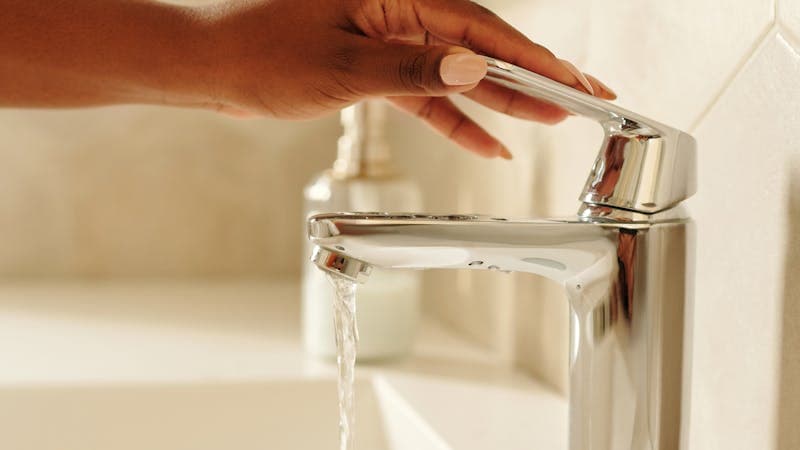
What Is Hard Water?
Hard water is simply water that contains elevated levels of dissolved minerals, primarily calcium and magnesium. These minerals are harmless to drink and don't pose health risks—in fact, they contribute some minerals to your diet. However, they do cause significant practical problems around the home.
Water hardness is measured in several ways. In the United States, we often use grains per gallon (GPG). Rochester's water hardness ranges from 5 to 7.6 GPG, which puts it in the "hard" to "very hard" category. For reference, 0-60 ppm (or 0-3.5 GPG) is considered soft, 61-120 ppm (3.5-7 GPG) is hard, and above 120 ppm (7+ GPG) is very hard. Rochester is right in the middle-to-upper range.
Sign #1: Spotty, Cloudy Dishes and Glassware
One of the first signs homeowners notice is spots and a cloudy film on dishes and glasses after washing. This white, cloudy residue is mineral buildup—calcium and magnesium deposits left behind after water spots dry. No amount of dish soap or rinsing removes this completely because it's not dirt, it's minerals.
These spots are purely cosmetic but incredibly annoying. They indicate that your dishwasher isn't working at peak efficiency, and replacing dishes becomes expensive over time. Some people resort to hand-drying everything immediately or using special rinse aids, but these are band-aids on a mineral problem.
Sign #2: Scale Buildup on Fixtures and in Pipes
Look inside your kettle, coffee maker, or showerhead. That white, crusty buildup is mineral scale—calcium and magnesium deposits that accumulate over time. In Rochester homes, this buildup happens fairly quickly in hard water areas.
Scale also builds up inside pipes, water heaters, and appliances where you can't see it. As scale accumulates, it reduces water flow, makes appliances less efficient, and shortens their lifespan. Water heaters in hard water areas typically last 8-10 years instead of the standard 12-15 years. That's an expensive consequence of hard water that many homeowners don't realize until the tank fails prematurely.
Sign #3: Dry Skin and Hair
Hard water interferes with how soap lathers and rinses. The minerals in the water react with soap, creating a film that doesn't rinse away completely. This film clogs pores and leaves a residue on skin and hair.
The result? Your skin feels dry, itchy, and uncomfortable even after moisturizing. Your hair feels limp, tangled, and hard to manage, no matter what shampoo you use. Some people with hard water notice they need stronger shampoos and conditioners just to manage their hair. Others develop skin conditions that mysteriously improve after installing a water softener.
If you've been buying expensive skincare products to address dry skin, hard water might be the real culprit.
Sign #4: Soap Scum and Film in Tubs and Showers
The same soap-mineral reaction that affects your skin and hair creates soap scum in your tub and shower. That stubborn, soapy film that builds up on shower walls, tub surrounds, and fixtures is nearly impossible to clean completely because it's not really dirt—it's the mineral-soap reaction.
Cleaning becomes a constant battle. You scrub, use harsh chemicals, and the scum returns within days. Standard bathroom cleaners don't work well because the problem is chemical, not bacterial. Vinegar helps temporarily, but it's a weekly maintenance task in homes with hard water.
Sign #5: Higher Soap and Detergent Costs
Hard water requires more soap and detergent to achieve the same cleaning power as soft water. Because the minerals interfere with how soap works, you need to use more of it—for shampoo, body wash, laundry detergent, and dish soap.
Over time, this adds up significantly. Families with hard water often spend 20-30% more on cleaning products than those with soft water. Add in replacement costs for appliances that fail early due to scale buildup, and hard water becomes an expensive problem.
Solutions for Rochester Hard Water
Water Softeners: The most popular solution, water softeners use ion exchange to remove calcium and magnesium and replace them with sodium (salt-based) or potassium (salt-free alternatives). A typical whole-house softener costs $800-2,500 installed and requires regular salt refills ($30-50 per bag, 3-4 times per year). The payback in extended appliance life, reduced cleaning product costs, and improved skin and hair quality typically occurs within 5-7 years.
Salt-Free Conditioners: For people who prefer not to add sodium to their water, salt-free conditioners are available. These use different technologies (like template-assisted crystallization) to reduce scale formation without removing the minerals. They're less effective at addressing all hard water problems but are cheaper to install and operate ($500-1,500) and require no maintenance or refills.
Point-of-Use Solutions: For smaller budgets, you can install a water softener for just the main line, or a filter pitcher for drinking water. These don't address the whole-house problem but provide some relief for the most critical uses.
The Long-Term Savings Case
If you calculate the true cost of hard water in Rochester—longer showers to feel clean, frequent appliance replacements, extra cleaning products, and higher water heating costs—a water softener often pays for itself. Beyond the financial case, the quality-of-life improvements (softer skin, shinier hair, easier cleaning) are worth the investment for many families.
Our team has helped many Rochester homeowners address hard water issues with both traditional softeners and modern salt-free alternatives. We'll test your water to confirm hardness, discuss your preferences and budget, and recommend the solution that makes the most sense for your home.
Schedule a free water test today to measure your hardness level and discuss which solution is right for your family.
Ready to Know Your Water?
This article covers the "what" and "why"—but every home's water is unique. Our free in-home water test shows you exactly what's in YOUR water and recommends the right filtration solution for your situation.
Schedule Free Water TestRelated Articles
Is Rochester Water Safe to Drink? What the Data Says
Rochester water meets EPA legal limits, but 11 contaminants exceed health advocacy guidelines. We break down the numbers and what they mean for your family.
Read more →
Lead in Water: What Rochester Homeowners Need to Know
1 in 3 Rochester water lines contains lead, and the city's replacement program won't finish until 2030. Here's how to protect your family now.
Read more →
Whole-House Filter vs. Drinking Water Filter: Which Do You Need?
Both have their place. We compare the two approaches and help you decide what makes sense for your Rochester home and budget.
Read more →